If you found this, you may already be aware of the BCS, formerly known as the British Computer Society, which is a professional body.
When I was graduating from university, I was offered one year of free membership with them, but I couldn’t find very much regarding whether people considered it worth joining. The only opinions I got were rather on-the-fence. So now that I’ve been with them for 11 months, I’d like to go into some detail of the whole experience and whether I’ll be renewing.
I’ll start off by quoting the contents of the email I received from university staff:
I’m reaching out as we have been given a few codes for our upcoming graduates which grant them a year free membership to the British Computing Society, at Professional Member level (MBCS). This would normally cost £178 a year, but the codes waive the cost for the first year, and then put you onto a phased early career pricing plan after the free year (currently £50 in Year 2, £92 in Year 3).
More information about the BCS and benefits of membership can be found here: https://www.bcs.org/membership-and-registrations/become-a-member/#Whyjoin
Could you please reply if you would like to make use of this offer? We have a very limited number of codes, and so I have only sent this email to upcoming Computing grads with a high GPA and good engagement. This is first come, first served, and please only request a code if you will make use of it.
There’s two things worth noting here:
- The price. My renewal cost is £187 (for one year of Professional membership). I don’t know what happened to the promised £50 (or let’s call it slightly more than £50 to account for price increases) renewal. I haven’t enquired to see if there’s been a glitch in the system and they’d be willing to honour it.
- The limited number of codes! My impression is take-up was low, but in any case it wouldn’t be very nice for me to deprive someone else of free membership if they wanted it more or were in a worse financial position.
- (Also, I wasn’t very engaged with the module he taught. So it certainly ran through my mind that he might not want me claiming a code. Then again, I wasn’t the only one with iffy engagement – I have an email here in which he is expressing concern about an attendance rate of 9%.)
Well obviously I signed up, so let’s walk through the experience…
Registration
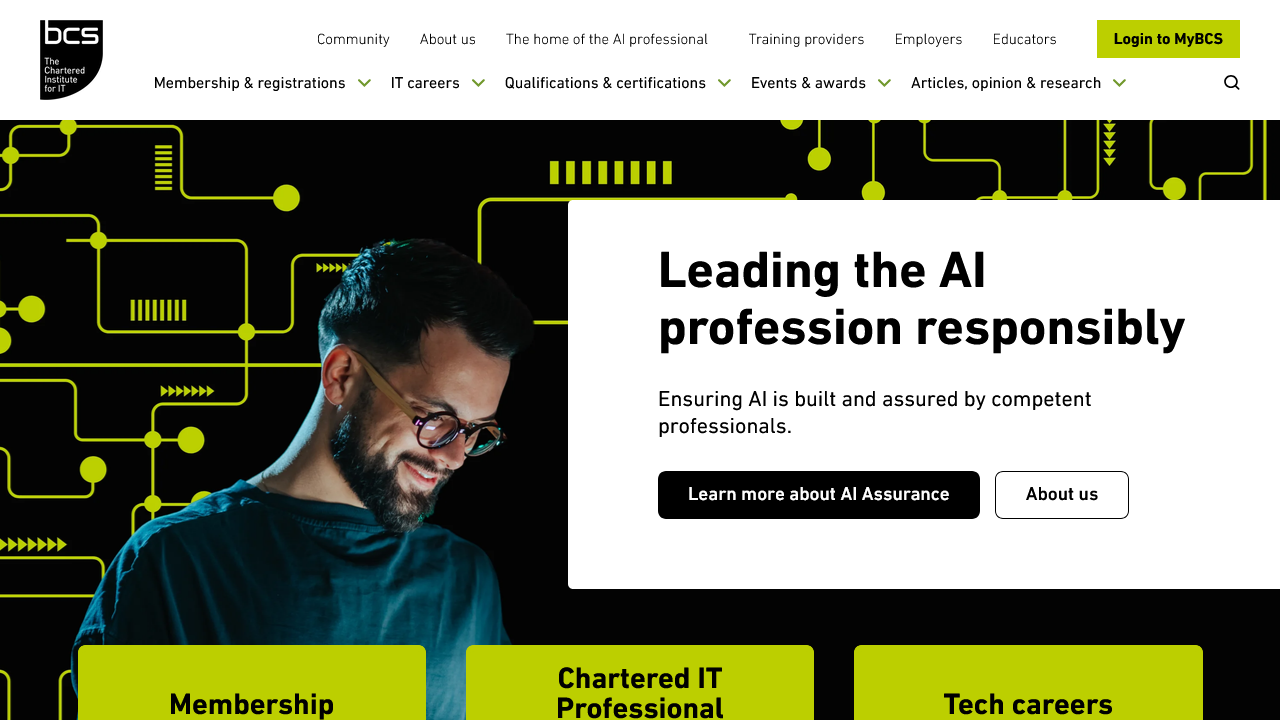
The registration process seemed easy enough in my case. The usual stuff. You get to choose whether to receive marketing from them by email and/or post – it’s funny to think a computing society still sends stuff via snail mail in this day and age but I guess some people prefer that.
It did ask for a CV (or LinkedIn profile), which was a little intimidating. It was in part due to that, I took a month after receiving the code to actually complete the application process! Fortunately it hadn’t expired by then (I don’t remember exactly where in the process the code field is, but it’s not at the start). You won’t have this issue if you aren’t a procrastinator.
After uploading a dismal CV, my application was approved in no time at all – surely it was an automated process scanning for IT-related keywords. There isn’t anything more to write here – they didn’t ask for photos of me or anything like that – so let’s move onto some of the benefits I made use of…
Forums
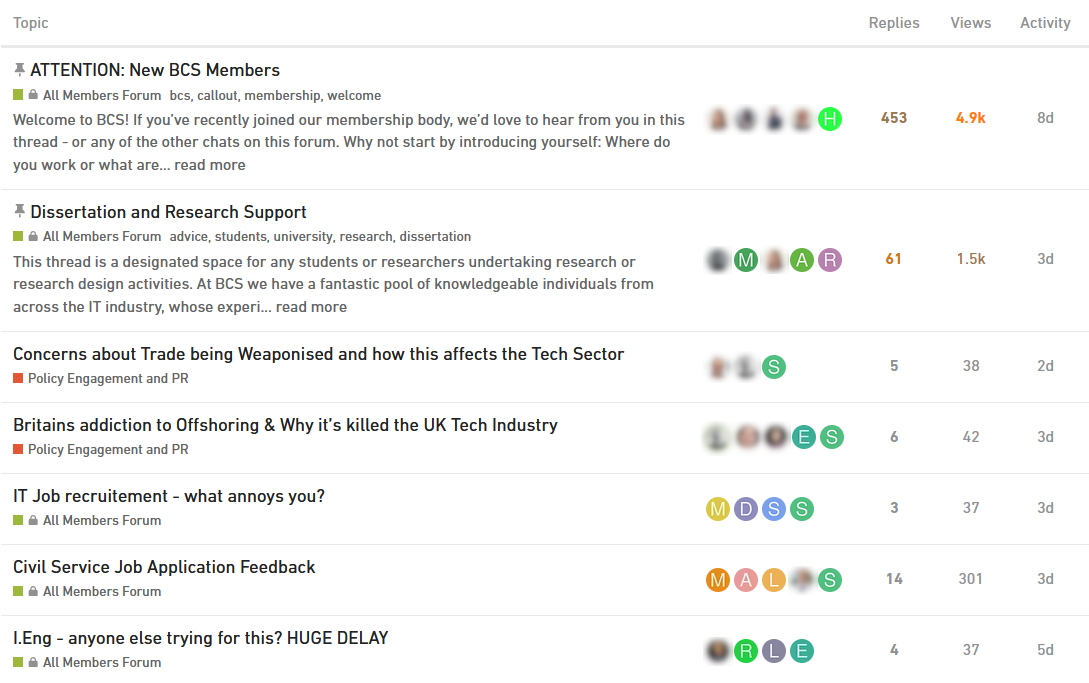
One aspect of BCS membership I thought could be interesting is the community forum. It’s much like any other discussion board powered by Discourse, only it is locked behind login. It’s reasonably active and has the occasional interesting discussion.
To be honest, I was hoping it would be more helpful for finding advice regarding job opportunities and gaining real-world experience. I don’t hold that against it, there’s just not much in that department compared to the likes of The Student Room and Reddit.
Courses
The BCS claims three CPD modules are included with membership. They’re mostly right – you get to choose two of those modules and the free one you don’t get a choice on is “The Ethical IT Professional”. These are short little online course things which can be completed in under an hour if you read through them, or just a few minutes if you don’t.
In each of these courses, it is possible to skip straight to the quiz at the end that decides whether you pass (I’m sure you can just try again if not). The ones I did all consisted of 10 very easy questions. Let’s use this one from “Developing an Agile mindset” as an example. The pass mark for that module is 60%, so you only need to get 6 questions correct.
Which of the following actions would not normally be included in a retrospective activity?
- Identifying any areas of skills within the team that could be developed.
- Assessing if there are any improvements in how the team is applying Agile.
- Discussing what worked well in the last sprint and how to carry that forward into future sprints.
- Understanding the part of the product that should be delivered next.
To solve this, all you need to understand is the word “retrospective”. Or not even that, “retro” would be enough. Anyone with half a brain can work out that the future isn’t retro (option D). And if your brain has fully rotted away, ask the AI.
Knowing this, I’m really not sure earning badges in these modules carries any weight. I put them on my CV anyway, with verification links, and not one interviewer asked me about them. They might have some value as a box-ticking exercise but if you would like to learn you can do so much better just by visiting YouTube.
Also, they use AI to help create module content, which isn’t so great to those who are paying attention. The purpose of the below picture is to study it and identify what difficulties someone with neurodiversity may face in an office environment:

Discounts
There’s various discounts included in BCS membership. One that looked sort of interesting was “up to 8%” (according to the internal pages; public-facing claims 20%) off Dell products, but I saved a lot more than 8% by not buying Dell and in many cases it would still be cheaper to buy from Amazon or John Lewis or wherever than Dell’s own website anyway.
If you do a lot of training or for some reason want the BCS’ books, the discounts might be worth it. As it was, I didn’t find an opportunity to take advantage. Or if you do want the Dell offer, the “unique passcode” is only three letters at the time of writing and I think you can guess which three letters they are.
Free stuff
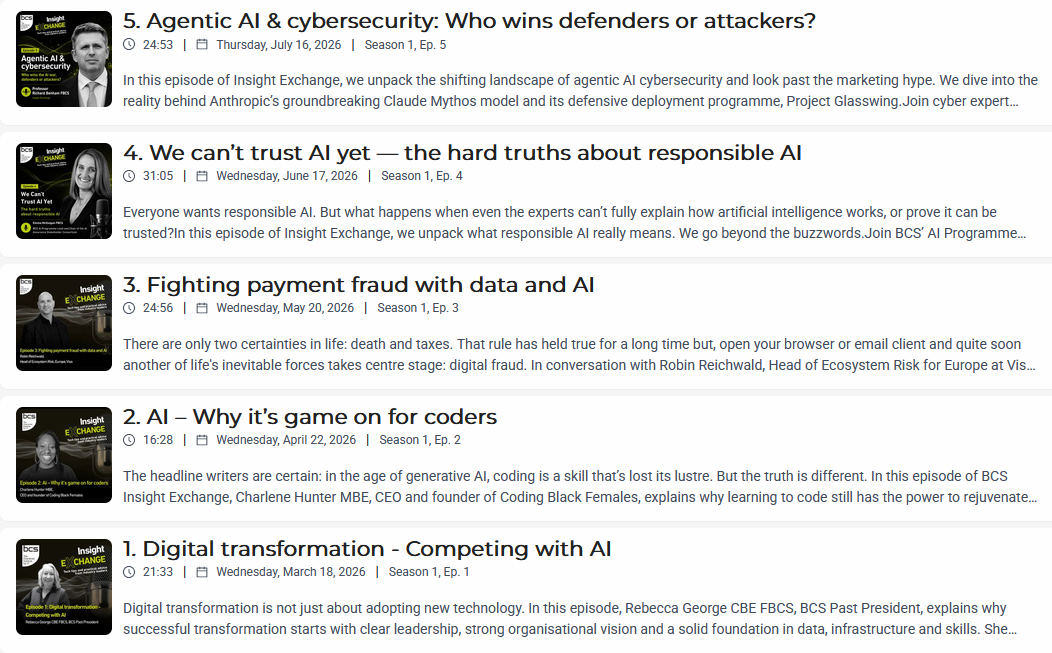
I feel it’s worth mentioning that some of the content the BCS will email you about if you have a membership can be accessed without one. Their podcast is available at https://shows.acast.com/bcs-insight-exchange/episodes if you’d like to listen to discussion about AI. Seriously, at the time of writing there are five episodes and every single one of them is about AI if the titles are anything to go off of.
You can also read their articles about AI and attend events about AI. I used to read some of the articles but got the feeling they were written by AI so stopped. Some of the events are members-only or offer discounts to members, e.g. “Trustworthiness and Safety in Generative AI – Artificial Intelligence SG” costs £108 inc. VAT for non-members, compared with £60 for members or £42 for students. But most of the events are free to all.
I didn’t attend any of the events but I did make a small collection of some of the more haunting AI-generated images they use to promote them.

Conclusion
As a graduate… if you love AI, and I mean really love AI to the point where it’s all you can think about, sure, check out the BCS. If you are interested in a balanced outlook on the field of Computing, avoid it. I bet there’s all sorts of interesting developments going on that they don’t touch upon because it isn’t AI.
If you are an IT professional with a swanky career, I’m not in a position to answer. I would say you should judge it for yourself and consider whether the cost is significant to you.
As I’m struggling to find any benefit from it even if it was free, I shall bid the BCS farewell for the time being. Should the market shift, I’ll take another look.